 10.39°C
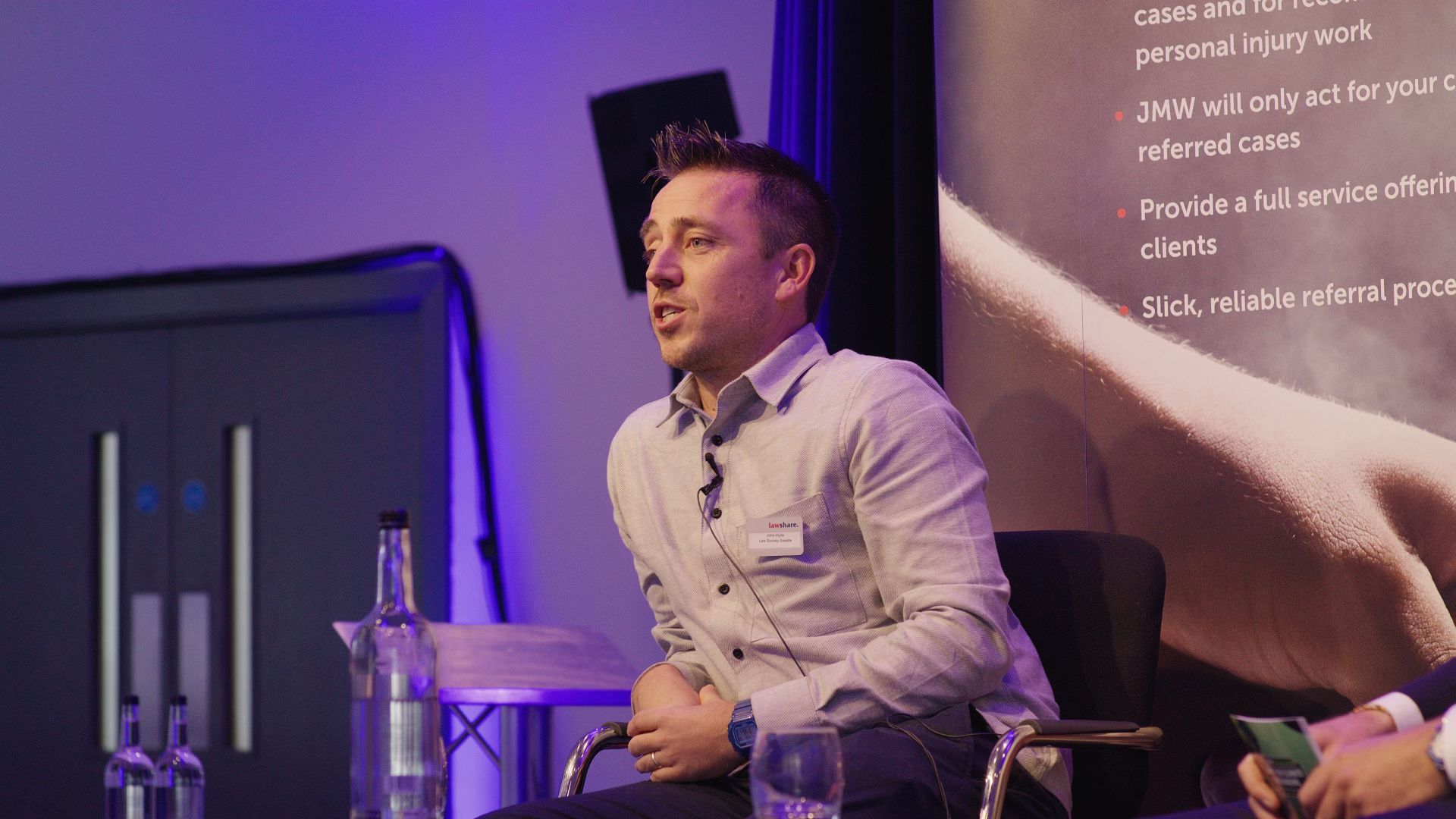
 Colchester journalist John Hyde has spent four years investigating the role lawyers played in the Post Office scandal for his first book, Indefensible, published on 15th September.
John, deputy news editor of the Law Society Gazette, will launch the book in Colchester at The Minories on Wednesday 30th September. Taking place at Ellisons, the event will include a discussion about the book, questions from the audience and an interactive look at some of the ethical decisions faced by lawyers during the scandal.
Ahead of its publication, I caught up with John Hyde at Three Wise Monkeys to talk about Indefensible, the investigation behind it, his route into legal journalism and why he wanted to bring the book to Colchester.
Why focus on the lawyers?
Indefensible examines more than 20 years of the Post Office scandal and the involvement of lawyers throughout that period, from contracts and prosecutions through to the civil litigation later depicted in the ITV drama Mr Bates vs The Post Office.
“It’s a forensic look at the whole 20-plus years of the scandal and the role of the lawyers within it,” John said. “It is a book which features lawyers, but which is not just for a legal audience.
“I am a non-lawyer myself and pride myself on managing to sift out or translate the legal jargon into something people can easily understand. I hope it will have wide interest, as well as appealing to the legal sector.”
Much of the public coverage has concentrated on the sub-postmasters and senior Post Office executives. John became convinced the lawyers’ role had received far less scrutiny.
“Most people understand this was a catastrophic IT failure, and many will know about the executives who oversaw a cover-up when the scale of the scandal unfolded. But what is less understood is the role of lawyers.”
During the public inquiry, John attended the days on which lawyers were questioned and noticed how little media attention those sessions attracted.
“I looked across at the near-empty press gallery. Paula Vennells and the other executives got lots of the attention, but there is a much wider scandal here with consequences for the whole legal profession.”
Lee Castleton and the Post Office
John had already reported on aspects of the civil litigation when he received a call from former sub-postmaster Lee Castleton.
Castleton, portrayed by Will Mellor in the ITV drama, was sued by the Post Office over an apparent shortfall of £25,000. After losing the case, he was ordered to pay the Post Office’s costs of £321,000. He was bankrupted and lost his home, while his children were bullied at school.
“He asked me to report on what the lawyers had done to him, and my research found evidence that people had discussed making an example of him as he was trying to raise issues around the Horizon system.
“He had been told he was the only one having these problems, and lawyers declined to disclose there were hundreds of complaints from others, effectively depriving him of his chance to properly defend himself.”
John believes lawyers occupied a different position from the executives running the organisation.
“You can’t forgive executives who engage in a cover-up, but you can almost expect people whose duty was to the company to act solely in the Post Office’s interests. Lawyers were different.
“They were supposed to be the gatekeepers ensuring the organisation acted ethically, offering advice to executives and investigators which ensured the rule of law was followed at all times. They had a duty to the administration of justice, and to the court, and in some cases, they failed to uphold those duties.”
Researching Indefensible
Some of what John found surprised him despite having reported on the legal profession for years.
“One was that the day before one woman’s trial, the Post Office lawyers were told by Fujitsu that there was a bug in the system. This discovery would have collapsed the trial and should have been disclosed. It wasn’t, and the woman was jailed whilst pregnant.”
Another was a handwritten note from former Post Office chief executive Paula Vennells in which she complained that her top lawyer had “put her integrity as a lawyer above the interests of the business”.
“That’s exactly what a lawyer should be doing, and Vennells seeing it was a weakness is hugely instructive.”
John was also surprised by the lack of independence he encountered during his research.
“Lawyers saw themselves not as legal advisers but as cheerleaders and supporters. They badmouthed the victims in private and saw them as the enemy. That runs contrary to what an independent lawyer should be.”
Having spent a few years working in legal marketing myself, I mentioned to John that I’d been surprised by how engaging legal content could be. Once you get beneath the legislation and procedure, so much of it is about people and the decisions they make. That led us onto whether the dilemmas exposed by the Post Office scandal could just as easily confront lawyers elsewhere.
“What do you do when the best-paying client is acting in a way that makes you uncomfortable?” John said. “How should you react when a client insists you fight litigation aggressively? What if you really do believe in what your client is telling you?
“I think a lot of lawyers will see these stories and wonder how they might react given the same scenarios.”
A career in legal journalism
For someone who has spent years reporting on the legal profession, John’s route into it wasn’t particularly planned. Before joining the Law Society Gazette in 2011, he worked in local journalism at the Colchester Gazette and worked shifts on national newspapers. One night at The Sun was enough.
“I did one night on The Sun, which, when I do after-dinner things, I’ve got 20 minutes’ material just from the night on The Sun. It was so horrific.
“In the morning, about four in the morning, when you finish the night shift, they said, ‘Could you do next week?’ I was like, ‘No. I can’t do this again.’
“Which probably tells you something about my moral compass but also tells you why I’m not a national newspaper reporter.”
A solicitor friend subsequently suggested John apply for a job at the Law Society Gazette. At the time, he knew little about the legal profession beyond the media law he had studied during his journalism training.
Before the interview, his friend suggested he talk about alternative business structures (ABS), which had opened the way for non-lawyers to become involved in the ownership and management of law firms. John duly announced during the interview that he was part of the “ABS generation”, which impressed his prospective boss, despite John not actually knowing what the initials stood for.
“I phoned my friend afterwards and said, ‘Cookie, what does ABS stand for? I don’t even know what letters you’ve given me.'”
John joined the Law Society Gazette in 2011, with his first piece an opinion article about the super-injunction involving Ryan Giggs.
“I think that was quite a nice way to start because it was an example that I could tap into the zeitgeist a little bit.”
Writing his first book
Writing Indefensible presented a very different challenge from the relatively short news stories that make up John’s working day. When his publisher asked for around 80,000 words within five months, his initial reaction was straightforward.
“I was like, ‘Oh my God, 80,000 words is an insane number of words.'”
He planned the chapters in advance and used recordings of the public inquiry as a foundation for the book. He also found that he enjoyed having the space to write at length.
“It was daunting at first, knowing this wasn’t chip paper and could be forgotten about tomorrow. This was so permanent.
“I was also conscious that I was telling a story that was so important to so many people and I didn’t want to let people down. I hope this book stands as a lasting record that can be studied for years to come.”
After four years working on the book, seeing it in print was a significant moment.
“Seeing it in print was a surreal moment. I had dreamed of this happening and to know I had achieved this dream was a wonderful moment.”
Clacton and Colchester
John’s book tour begins in London on publication day before visiting Manchester, Liverpool, Colchester, Cardiff and Leeds, with Norwich and Nottingham also expected to follow.
Although John now lives in Colchester, he is proudly from Clacton and was keen to make that distinction when we spoke.
“I grew up in Clacton, so that is really important to me as well.”
He was one of only two pupils from Clacton who went to the grammar school in Colchester, an opportunity he believes had a significant influence on what followed. No one in his family had previously attended university before John went to York.
“I was quite proud of that. I wouldn’t have done that without going to the grammar school.”
John feels strongly about aspiration in the town where he grew up and worries that the route he had is no longer as accessible to young people there.
“There’s not enough aspiration in Clacton,” he said. “The kids now in Clacton who would love to do that just don’t know how to or how to do it. The grammar school was a way to bridge that, and they don’t have that anymore.”
Colchester subsequently became home. After living in London, John returned to the city and says he feels “really drawn” to the place, even if old habits mean he still calls it a town.
His early years working in local journalism also gave him a sense of being part of a community, something he now recognises in his work covering the national legal profession.
“You’d be in the pub, and someone would go, ‘What’s happening with this new building that they’re supposed to be putting up on the seafront?’ And I’d go, ‘Well, actually, I know this, and I can tell you this.’ You were really part of a community.
“I kind of feel like that now. Even though I cover the national legal profession, it feels like a community of its own. When I meet lawyers, I get that same sense that I’m a bit of a fount of knowledge for them to tap into.”
The Colchester book launch
The Colchester launch takes place at The Minories from 6pm on Wednesday 30th September, with Ellisons hosting the evening.
“Hopefully there’ll be lawyers there, but also friends and family and people who helped me with my career at the start.”
The evening will include a Q&A, but John also wants the audience to consider some of the decisions lawyers faced during the scandal.
“I’d like an interactive element to present real-life scenarios that cropped up during the 20 years of the scandal and ask people, not what should you do, but what would you do?
“We all know what you should do. But you might have your biggest-paying client asking you to do something that you’re uneasy with. You’ve got a mortgage to pay. This literally was a scenario that people faced.”
Colchester United
Away from journalism, John is a longstanding Colchester United supporter. It began when his dad took him to see Ipswich Town, Norwich City and Colchester United when he was six and then asked which club he wanted to support.
“I was like, ‘I’ve got to go Colchester because you can get burgers at Colchester.’
“I do sometimes regret that burger. That burger has cost me a lot of misery in my life, but it’s also given me so much joy.”
John now has a season ticket alongside his children and particularly values the relationship between the club and its supporters.
He recalled writing to the club after his older son had experienced a difficult year, asking whether someone might send him a birthday card. Manager Danny Cowley instead recorded a personal video message.
“Honestly, I’m so grateful. He’s just a class act. He’s a lovely guy, connects with the fans, and it’s no coincidence that the best managers Colchester have had are the ones that connect with the fans.”
His favourite memories include the club’s 2006 promotion season and Wembley trips in the 1990s, but there is still one experience he would particularly like to share with his children.
“If I could have one wish, it would be that I could take my kids to Wembley to see Colchester.”
What comes next?
Having initially doubted whether he could write 80,000 words, John is already considering another book. One possibility comes from another corner of the legal profession: the boom in personal injury claims during the 2000s.
He recently heard stories about personal injury conferences where luxury car manufacturers displayed Ferraris and Porsches, and promotional models appeared as money poured into the industry.
“There was so much money. You remember the 2000s; it was always cash for crash and, ‘Have you got a sore neck? You can get three grand.’ You don’t really see those anymore.”
John sees the potential for a wider story about how the industry expanded, who made money from it and what happened when the market changed, while also looking at people with genuine injuries who found themselves caught up in the resulting reputation for “ambulance chasing”.
“I think there’s a book in there.”
Much of Indefensible was written while John continued working full-time, including evenings spent at the Dog and Pheasant in Colchester.
“The Dog and Pheasant were incredibly accommodating at tidying up around me at 11.15pm while I was still tapping away, and they were like, ‘Sorry, you probably are going to have to leave.’
“I didn’t include them in my acknowledgements because I thought it was an academic book. I probably should. But I would love to give a shout-out to the Dog and Pheasant about how kind they were to let me write.”
Indefensible by John Hyde is published on 15th September 2026.
John will launch the book at The Minories in Colchester on Wednesday 30th September from 6pm. The event is supported by Ellisons. To attend, RSVP to events@ellisons.com.