 3.47°C
 Colchester is set to host the World Fringe Congress in 2028 – the first time the global gathering has ever been held in England.
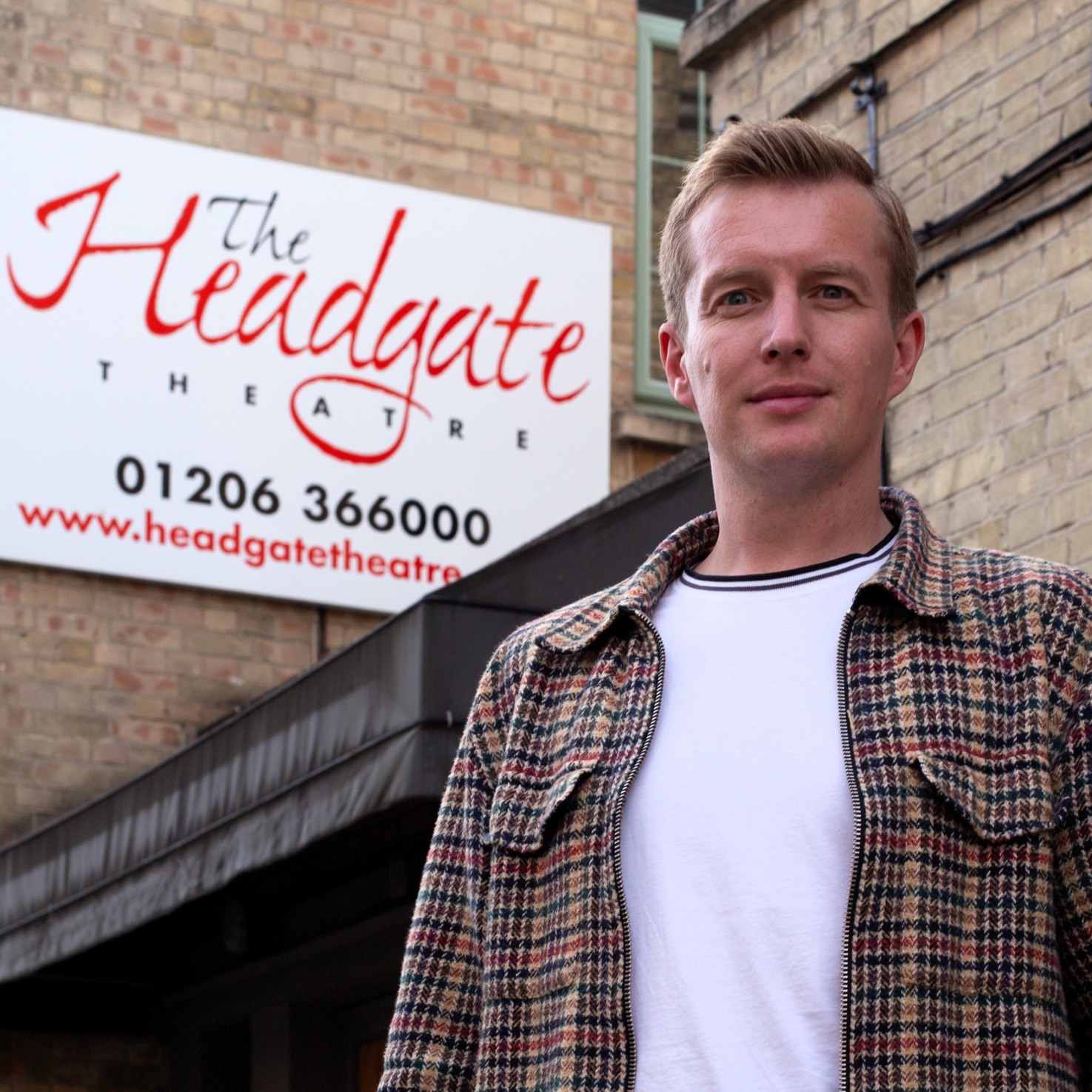
It’s a significant international endorsement of what’s been building here for years. At the centre of that momentum is Dr Cameron Abbott-Betts – director of Colchester Fringe and newly appointed Director of the Headgate Theatre.
With the Summer Weekender (23–26 July 2026) now open for applications, the Autumn Fringe expanding again, and the Headgate entering its five-year “Now and Next” strategy, this feels less like a peak and more like a launch point.
Ben Howard of Keep Colchester Cool sat down with Cameron to talk celebration, strategy and why Colchester’s cultural moment is only just beginning.
“We obviously had a joint celebration on that night itself”
The Congress win didn’t happen overnight.
“We put in our application last year,” Cameron says, “but the meetings and stuff like that had taken place kind of early – from kind of two years ago, really. So it was a long time to get the bid together.”
When confirmation arrived, it landed at a very personal moment.
“It was December and just before my engagement party. So when I told a couple of members of the team at my engagement party, we obviously had a joint celebration on that night itself.”
From Indianapolis to Adelaide – and back to Colchester
The idea of Colchester Fringe actually stretches back further than 2019.
Cameron was in his early twenties when he performed at his first fringe festival — not Edinburgh, but Indianapolis.
“It was a little sleepy city where nothing was really going on,” he says. “And then as soon as the festival started, it just went off.”
That was the moment.
“I said, I’m going to start one in Colchester. I’ve seen what this place has got. Colchester’s got better assets. Better venues. Everything’s closer together.”
The idea stayed with him. Years later, he attended the World Fringe Congress in Adelaide – home to the second biggest fringe in the world and the largest arts festival in the southern hemisphere.
“Adelaide Fringe is basically Edinburgh in Australia,” he says. “It’s huge.”
Seeing that scale – and then attending Congress in Stockholm – helped shape his understanding of what a fringe can do for a place.
What the World Fringe Congress means in real terms
For Cameron, the impact of hosting in 2028 is tangible.
“It’s a huge, huge, huge opportunity to showcase Colchester,” he says.
The team even calculated the digital reach.
“We added up all of the social media followers from everyone who was at the previous Congress. It came to two million. So that would be reaching around 2,000,000 people – tweeting and sharing Facebook stories and Instagrams and TikToks about cultural stuff, because that’s what’s going to happen.”
The hospitality impact is obvious – hotels, restaurants, footfall – but for Cameron, the real value lies in access.
“Our artists are going to be placed in front of some of the biggest programmers in the world in theatre and the arts, and they’ll be able to showcase their talents and hopefully get some work from them in the future.”
That exchange already happens. Through Fringe connections, a Colchester performer is now touring Japan with a company that first came here through the festival.
“That wouldn’t have happened if we hadn’t met,” he says.
Why Colchester won
Colchester’s pitch wasn’t just about logistics – it was about identity.
“We invited the World Fringe Organisation to Colchester,” Cameron says. “I invited lots of different festival directors who would be voting. My job was basically a tour guide – showing them the castle, showing Jumbo, talking about the history.”
The city’s heritage made an impression.
“They loved the history. We couldn’t believe how historic it was. Trying to explain to people that actually this was the capital of England before London.”
Timing also helped. Many Congress delegates travel on to Edinburgh, and Colchester’s October Fringe didn’t align naturally.
“So I said, okay, for that year, I’ll go to July. That means they can come to Colchester, then go to Edinburgh afterwards. It’s all part of the same trip then.”
That strategic flexibility strengthened the bid.
Summer Weekender – testing July
Before the full July move in 2028, Colchester Fringe is running a Summer Weekender in 2026 and 2027.
“We’re still running our main festival in October,” Cameron says, “and then eventually in 2028 our main festival moves to July.”
The first Summer Weekender runs 23–26 July 2026.
In many ways, it returns to the roots.
“We started off with a one-day festival, and then we went to a four-day festival. We did that for two years, and that was special. You really built those connections between artists, venues and audiences.”
There’s strong international interest already – particularly from performers heading to Edinburgh.
“One of the hardest things about going to Edinburgh is getting a review. Our marketing comes before you go. So they’re coming there with a show that’s ready.”
This year will use more outdoor and flexible spaces.
“A few outdoor spaces, because it is July. Less theatres. More one-person shows or outdoor shows. A lot of families, as it’s the school holidays.”
And the ambition is clear.
“By 2028, we’ll have a two-week festival in July.”
The Autumn Fringe – bigger, but rooted
The October Fringe continues, too, and is expanding.
“It was 10 days last year. It’s looking like it’s going to be 12 days this year because I’m insane,” he says.
But length isn’t the metric that matters.
“One of the things I measure success on is how many companies come back. Around 80%, maybe 85%, have performed in Colchester more than once.”
The local balance remains crucial.
“We programme 50% of our acts from Essex,” he says. “That’s really important to us.”
The breakdown typically sits around:
- 50% Essex
- 25% wider UK
- 25% international
“If we became completely international, I think it might exclude people,” he says. “Colchester has to be at the heart of it.”
That equality runs through pricing too – with major acts sharing equal billing and ticket pricing with local youth groups.
“There’s no gloss or hierarchy,” he says. “They’re equal.”
Pandemic resilience – and chalk circles
The Fringe’s resilience was forged during COVID.
“It built really two things – a real strong resilience within ourselves. It got to the point where you go, ‘Wait, this is going to happen,’ and we just had the patience and kept going.”
The 2021 #ShopWindowTakeover, with no promotion allowed, became a defining moment.
“We weren’t allowed to promote it,” he says. “It was just like, this is it. People are going to be shopping. Let’s see what happens.”
Volunteers drew chalk circles on the pavement to keep people socially distanced. It was surreal – and packed.
“That was the launch of Colchester Fringe, really.”
Unexpectedly, the delay gave the festival 18 months of extra brand-building.
“We wouldn’t have had the same reach if we’d started in 2020,” he says.
The Headgate Theatre – a full circle
Taking on the Directorship of the Headgate Theatre felt personal.
“The Headgate’s been such a big part of my life since I was a boy. This is where I first performed.”
Getting the job hit emotionally.
“It was a real emotional moment. What an honour.”
His goal is simple but transformative.
“I want more people to come into the Headgate, experience how beautiful it is and how wonderful it is. It’s about expanding the audience, not losing anything.”
He wants it to become a destination – not just somewhere you attend a show and leave.
“People aren’t just coming in to watch a show. They’re coming in to hang out. To be creative. To be social.”
He’s also keen on stronger collaboration across the city’s venues.
“We have to start getting in the same room and talking,” he says. “How can we work together?”
In his words:
“We’re a city now. And these are the things that happen in cities.”
A defining chapter – if it’s used properly
Cameron believes this is a significant moment – but only if it’s activated.
“We always evolve. What we can’t do is stand still.”
His caution is clear.
“You need people to make stuff. You need to be able to put stuff on its own risk.”
He doesn’t want stagnation.
“I don’t want the same people doing the same things. We need to encourage more people to do new things, because we’re not all going to be here forever.”
Five years from now
What would make him proudest?
“That the Headgate would be a really beautiful place in terms of what it is and what people see it as. That we’ll have a successful Congress where local people and local businesses will really benefit. The Fringe would still be thriving and growing, but also still nurturing local talent.”
And personally?
“I’m still in love with what I’m doing. If you fall out of love with what you’re doing, your work will suffer. At the moment, I love what I do, and I’m really thankful. I don’t have to go. I get to.”
Exciting times, indeed.