 7.83°C
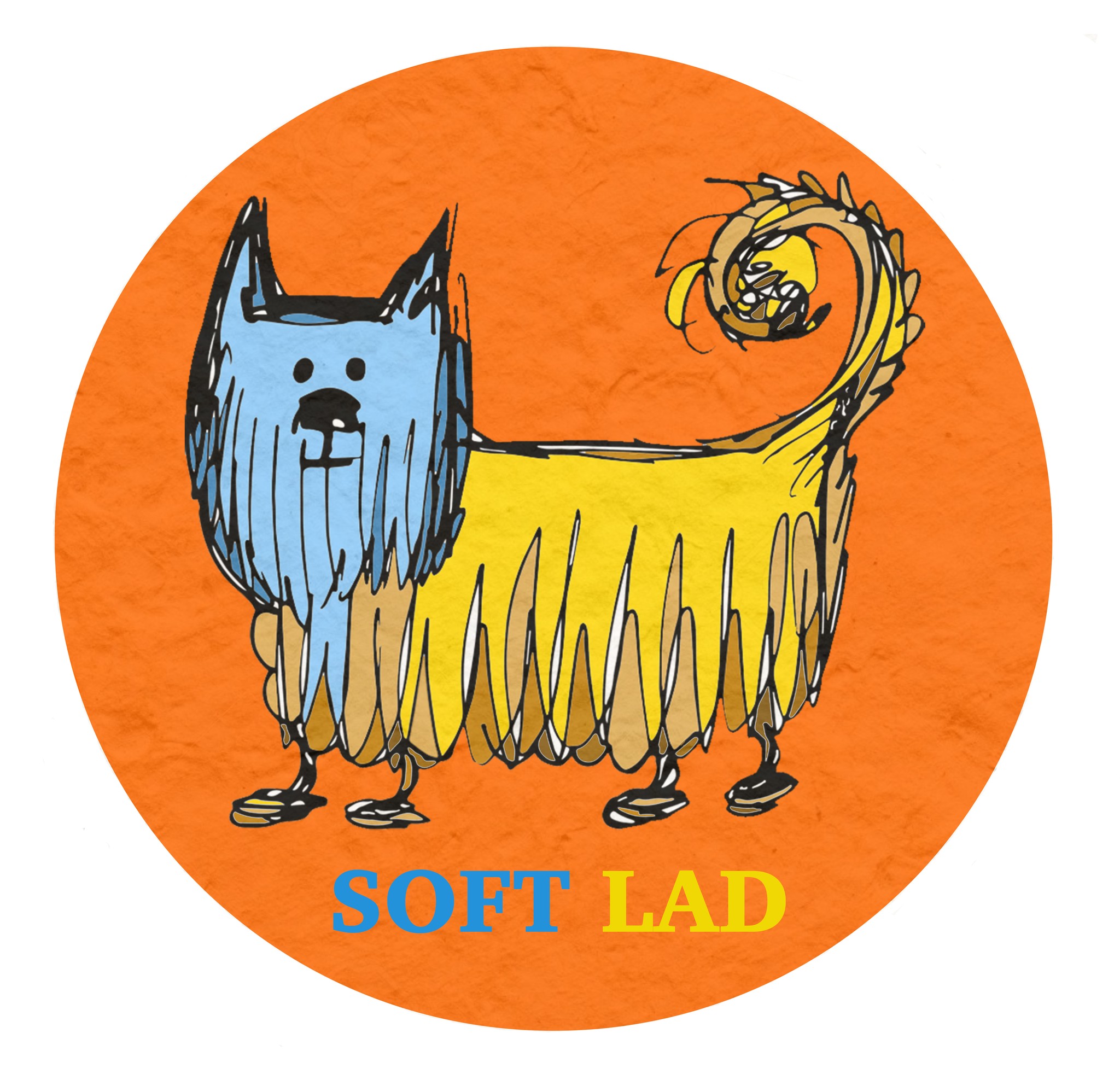
 Colchester recording artist Johnno Casson aka Snippet, returns on 15 May with Soft Lad, his ninth album and perhaps his most personal yet – a reflective record shaped by illness, resilience and the enduring pull of music.
Across 15 tracks, the album blends analogue textures, lo-fi grooves and reflective songwriting, moving between darker moments and flashes of warmth. Written during a period of chronic illness that forced him to rethink how he makes music, the record finds Johnno Casson rediscovering the stripped-back, sample-led approach that first drew him into recording.
Long respected in the independent music world, Johnno first came to wider attention with the band Deep Joy, working alongside collaborators including Andrew Weatherall and David Harrow around the orbit of James Lavelle’s Mo’ Wax label. Songs he wrote and performed with the group were championed by broadcasters such as Gilles Peterson, helping establish his reputation within the UK’s independent and electronic music scene.
Over the years, his music has continued to attract praise from critics and broadcasters alike. BBC Radio 6 Music’s Tom Robinson once described him as “a national indie treasure”, while Louder Than War labelled him a “pop genius”. Americana UK once memorably described his work as sounding like “an East End Brian Wilson on a budget”.
Closer to home, Johnno is also known as one of the driving forces behind Colchester’s Warm & Toasty Club and the Memory Afternoons – uplifting social entertainment events that bring music, connection and companionship to those who attend.
Ahead of the release of Soft Lad, he spoke to Keep Colchester Cool’s Ben Howard about illness, creativity, the Colchester music scene and why music still works as both medicine and lifeline.
Interview
Johnno Casson speaks with the same thoughtful warmth that runs through his music, reflecting on illness, creativity and the community work that has become such an important part of his life in Colchester.
Soft Lad is your ninth album. Looking back across your catalogue, where does this one sit for you personally?
I think it’s probably my most serious album. That’s something that’s been reflected back to me by family and by Dave Milligan, who mastered it.
There have always been threads of my life running through my music, but chronic illness has been such a big part of recent years that this record reflects that more openly.
Even so, I didn’t want it to feel heavy. There’s always a bit of warmth in my songs, and you will find it on Soft Lad. Even when they dip into darker places, there’s usually a small glint of optimism somewhere in there.
You’ve described the album as “a slice of life in a minor key”. What was going on in your life while you were writing these songs?
A lot of it comes from dealing with illness and the grief of losing a family member, and trying to work through that with music. But Soft Lad is not only about that – I couldn’t be a full time miserabilist and am never far from my in-built sunny disposition.
There are songs about love, about longing, about happiness and about wanting to be somewhere better. Life isn’t one thing, so the record isn’t either.
Writing songs has always been the way I process things.
One thread running through the record is the idea of music acting as a kind of medicine. Has making music helped you deal with the health challenges you’ve been facing?
A huge amount.
Music has been part of my life since I was about fifteen or sixteen, and I’ve always felt incredibly lucky to have that outlet. When things are difficult physically, it can still take you somewhere else.
If I sit down and start shaping sounds or building a track, suddenly a few hours can pass where I’m not thinking about pain or fatigue in the same way.
In that sense, it really does feel like medicine.
At one point, illness affected your hands and forced you to rethink how you made music. How did that moment change the way you approached writing and recording this album?
My hands were pretty mashed up for a while. I’ve got a few conditions going on – arthritis, carpal tunnel and some other bits – so I couldn’t just pick up a guitar and play the way I used to.
I remember sitting there thinking I might not be able to play the way I used to anymore, which was quite a frightening thought when music has been such a big part of your life.
The U-Bass changed that. Suddenly, I could make music again without fighting my hands all the time, and that opened the door back up creatively. I started writing simple bass patterns and building songs around those.
In a strange way, the limitations helped. It pushed me back towards a simpler way of working. I made the album on a really old computer that was on its last legs, so it became quite liberating to have to simplify my approach and use less parts in each song to keep the computer from crashing.
The shift in how he worked also opened the door to a more reflective set of songs, where personal experience sits closer to the surface than before.
The album has a distinctive sound – analogue textures, lo-fi grooves and stripped-back arrangements. Did that grow out of those limitations, or was it a sound you were consciously chasing?
A bit of both, Ben.
Some of it came from necessity because of the way I had to work physically, but I’ve always loved analogue textures and older bits of gear.
Running sounds through older units gives them warmth and character. Those repeated bass patterns and rougher textures suited the reflective mood of the record.
Some of the songs feel unusually open and personal. On Some Days, you even name-check me, which I have to admit was rather humbling. Did you find yourself writing more autobiographically this time?
I guess I wasn’t sitting there thinking I was going to make an autobiographical album. I just started writing about what was going on in my life and what I observed in others.
But I did know I wanted to be more open, and some of the songs naturally went that way because of what I’d been going through. I’d love to hear what or who people think some of the songs are about.
As for name-checking you, that came from gratitude, really. You introduced me to a lot in Colchester, gave me opportunities and solid advice over the years, and helped shape my life here.
So, it felt right to acknowledge that.
I feel genuinely lucky that I met you, Ben, and you should be saluted for all the good you do.
On Sometimes I Fade you touch directly on living with illness, including the line about hiding it from people because of shame. Was it important to reflect both the vulnerability and the resilience that comes with that experience?
Yes.
For a long time, I didn’t talk about the illness side of things very openly. Part of that was not wanting to be defined by it, and part of it was probably a bit of embarrassment, too.
Writing the songs helped me move past that. I may fade sometimes, but I always come back.
Let’s Talk About Us (The Earthly Delights Remix) has a strong Shoom / Balearic feel to it. Were those early club influences consciously in your mind when you worked on that track?
Not at first, Ben.
I was already part way through making the album when I started revisiting some of that early dance culture again. The Shoom and Balearic Beats era had such a sense of openness about it, both musically and culturally. It felt like anything could happen on a dancefloor.
Working with and watching Andrew Weatherall years ago definitely left its mark on me. He had such a deep understanding of groove and atmosphere.
When I rediscovered a remix of ‘Let’s Talk About Us’that I made for a radio session, it suddenly fitted the direction the album was taking and actually became a bellwether for how the journey developed through the second half of the album.
You’ve worked with some remarkable figures over the years — from your Deep Joy days alongside Andrew Weatherall and David Harrow through to collaborations with Adrian Sherwood. What did you take away from working alongside people like that?
The main thing is that I’m a sponge.
Being around people like that, you absorb things without even realising it. Earlier on, with Deep Joy, we were lucky enough to have people like Gilles Peterson championing the music.
When someone with ears like that says they hear something in what you’re doing, it encourages you to keep going.
You’ve been part of the Colchester music scene for many years. What has the city given you as an artist?
It has given to me massively.
Colchester gave me a chance, and it’s been a brilliant place to live, raise a family and make and perform music.
The arts and culture scene in Colchester is great. It has always had an excellent creative streak running through it, and I’ve always felt lucky and proud to be part of that.
Alongside his recording work, Johnno has also become closely associated with one of Colchester’s most uplifting community projects.
Through the Warm & Toasty Club and its Memory Afternoons, he and the team host regular events designed to bring music, companionship and laughter to older residents across the city – afternoons that many attendees say help them feel happier, less isolated and more connected.
Running the Warm & Toasty Club and the Memory Afternoons has become an important part of your life here. What does it mean to give something back locally through music?
It means a huge amount.
Sometimes you see the effect music can have straight away. Someone might arrive feeling quiet or withdrawn, and then a song comes on that they remember, and suddenly they’re singing along with everyone.
We’ve also had people tell us that the afternoons give them something to look forward to all week. For some, it’s the main social connection they have.
We’ve always called it a happiness exchange. People come along feeling low and leave feeling lighter – and that lifts us too.
Music has this incredible way of bringing people back into the moment, even when life has been difficult.
Soft Lad is released on 15th May. How can people hear the album and support it?
The best place is Bandcamp because it supports me most directly.
People can pre-order the digital album there, buy the CD, and there’s some merch as well. Everything is linked through my website and Linktree.
But honestly, one of the best ways people can support the record is simply by sharing links to it and helping it reach people who might connect with it.
When people listen to Soft Lad for the first time, what do you hope they take away from it?
I hope it resonates.
If people hear something in it that reflects their own experiences or emotions, then the songs have done their job. Like every artist, I hope my songs soothe, move or lift people or just help them get through their day.
Life can be complicated and messy, but there are still moments of joy and connection everywhere. If the record reminds people of that, then it’s done its job.
With Soft Lad, Johnno adds another thoughtful chapter to a long and varied musical journey, one that has seen him become a familiar and valued presence in the Colchester music scene. If the new album reflects the challenges of recent years, it also reflects the outlook that continues to drive his work: that music, connection and creativity can still bring light, even on the difficult days
Soft Lad is released on 15th May and can be pre-ordered now on the Johnno Casson aka Snippet Bandcamp page.