 9.09°C
 Review by Keep Colchester Cool Theatre Editor, Paul T. Davies.
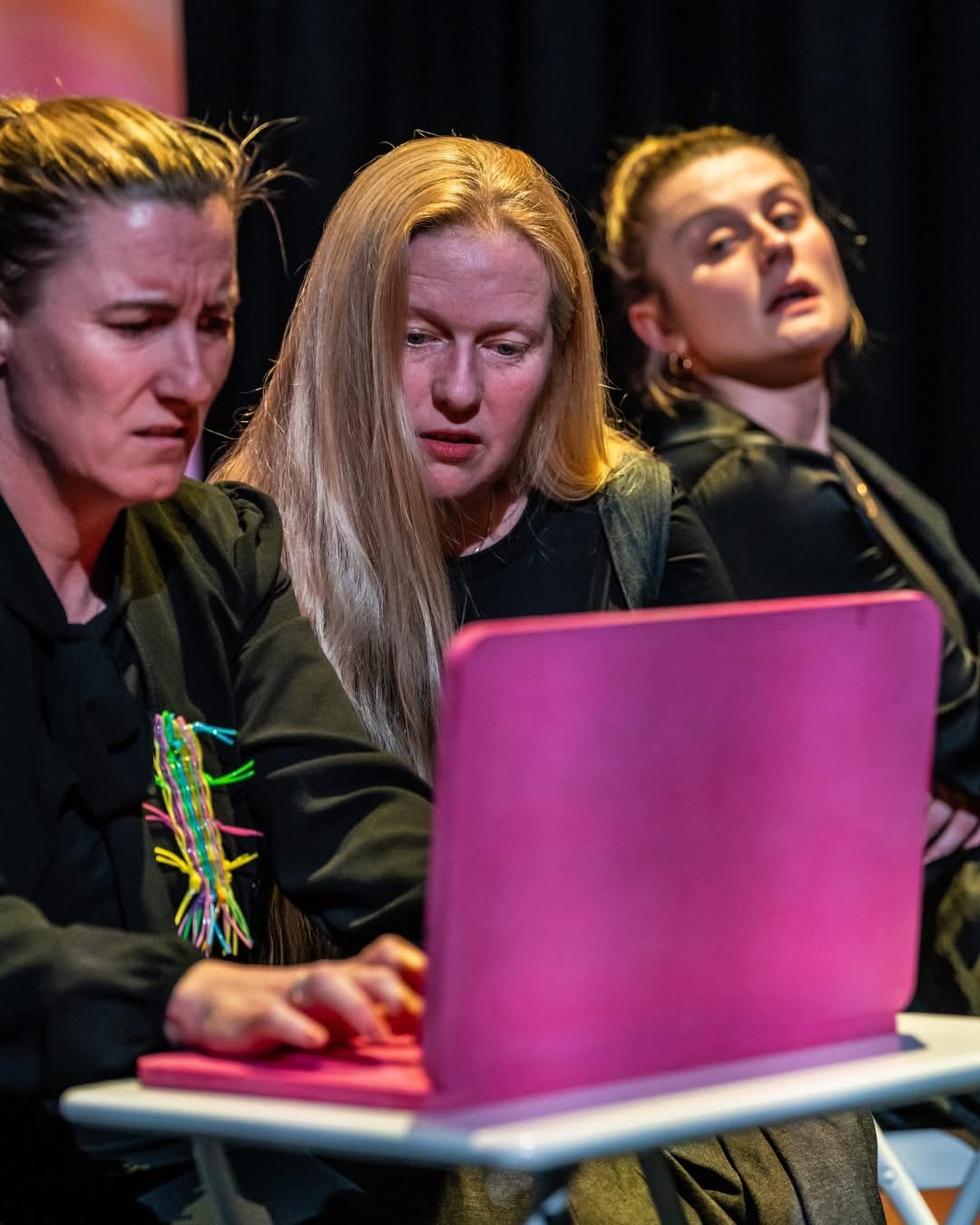
Love and Information, presented by the Mercury Adult Company, played at the Mercury Theatre Studio in Colchester.
As the Mercury Young Company populate the main stage with Wind in the Willows, the Mercury Adult Company present something altogether different in the Studio. Caryl Churchill’s tricky play comprises over 50 short scenes, some of them incredibly brief, seemingly unrelated apart from the theme of the play, and the piece is fascinating and frustrating in equal measure.
Luckily, director Forest Morgan, holder of the Keep Colchester Cool Theatre Award for Best Director, has a clear vision, and the company have worked incredibly hard to bring that vision to life. The set design is probably the biggest I have seen in the Studio, allowing excellent movement around the stage, although it pushes the cast very close to the front row. However, that does reflect the big and bold ambition of the piece.
Each cast member plays multiple roles, and there are some standout performances, especially from Georgie Ward, who encapsulates a range of emotions in her scenes. Christine Rogers, Nat Patterson and Ed Porter were notable performances, but the whole ensemble met most of the challenges very well. Churchill’s trademark overlapping of lines, aiming to make the text more conversational, was often missed, leaving gaps and pauses between cues, and the pacing was off. However, in the stronger second half, when scenes became longer, the work began to shine.
In particular, a robot dog represented our growing love of “cute” technology and our growing loathing of it; Charlotte Beeby’s lighting design was very effective here. In fact, the lighting and sound design are very atmospheric, and the title of each scene is projected onto the back, creating an excellent throw to the interval.
Written in 2012, it is astonishing how ahead of its time some of Churchill’s play is. A scene in which one character argues that another character cannot be in love with a virtual person anticipates people who now claim to love their AI partners. Another scene, in which an anxious woman answers micro-trivia questions whilst her partner wonders whether she still loves him, is deeply relevant. Each scene shows the increasing hold technology has on us, and, cleverly, our reactions to the piece demonstrate how we will all respond emotionally to it, needing to humanise it.