 20.41°C
 Discovering Hip-Hop
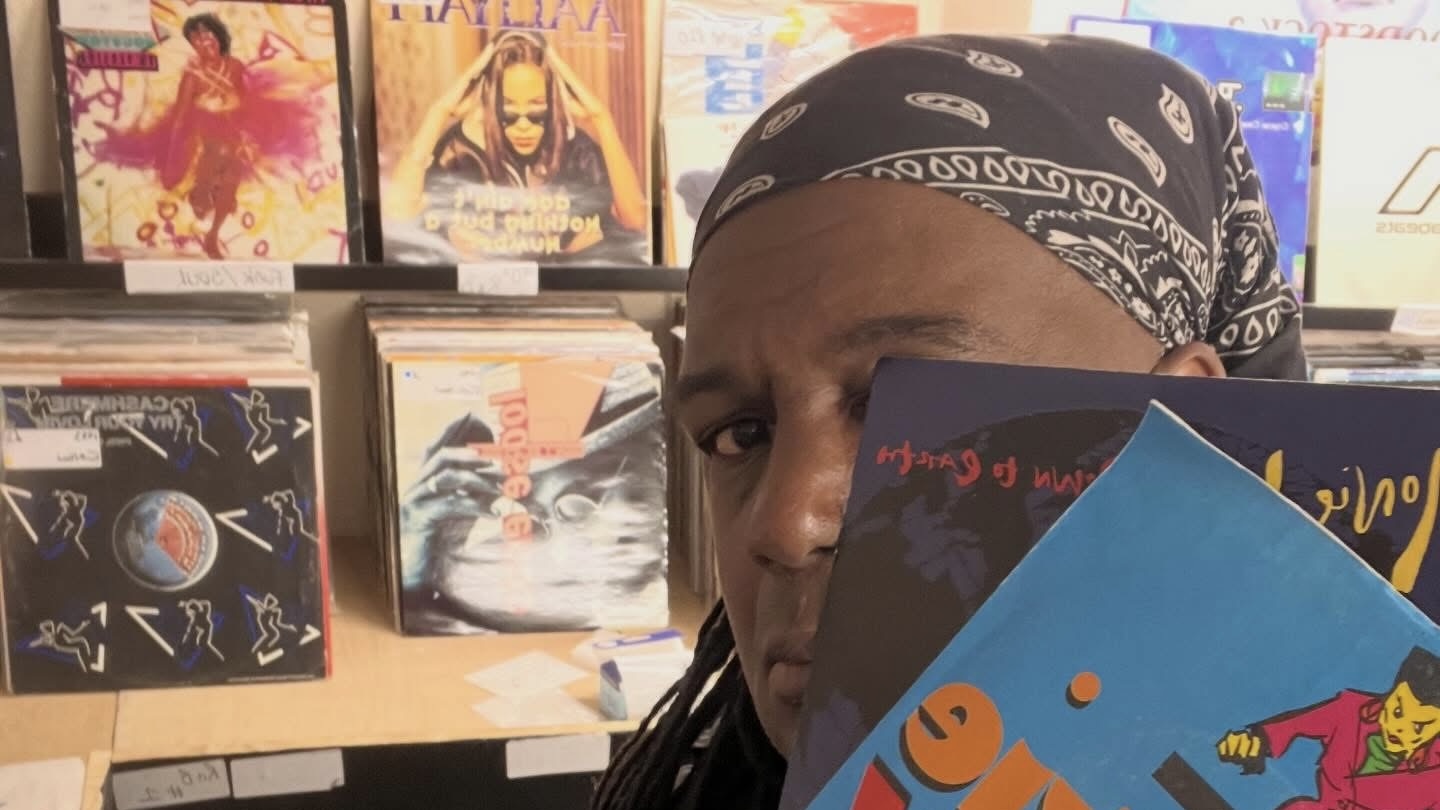
If you’ve spent any time near Roots & Grooves recently, chances are you’ve seen DJ Pogo.
He’s usually surrounded by records. Sometimes he’s reorganising shelves. Sometimes he’s pulling out albums that have sat unnoticed for years and explaining why they’re worth another look.
Since Richard Cosgrove and Chelle Luk-Hang took over the venue, Pogo has been helping reshape the record room above the café, introducing a new pricing system, reorganising sections and making it easier for people to explore what is becoming one of the most interesting vinyl spaces in the city.
Records have been part of his life for as long as he can remember.
Growing up in East London, music wasn’t something separate from everyday life. His mother had a large collection of country and western, calypso and reggae records. His father bought dub singles. Family gatherings revolved around music, dominoes, food and conversation.
Pogo can remember music being part of his life from the age of three.
His earliest memories involve family parties, a powerful quadraphonic sound system in the house and stacks of 45s that he and his sisters would sometimes roll along the skirting board, much to the horror of collectors reading this today.
Many of those records survived.
He describes music as “the social media of the time”. Television offered three channels and eventually went off the air for the night. If someone had discovered a new record, people would gather to hear it. Music travelled through conversations, recommendations and shared experiences.
One of his uncles bought a pair of Citronic decks and disco lights. Around the same time, a school caretaker was using similar equipment at school discos. While most children were enjoying the music, Pogo found himself fascinated by the equipment behind it.
“I wanted to know how it all worked.”
At home, his sisters introduced him to completely different musical worlds. One bought reggae, lovers rock and disco. The other was into new wave, chart music and whatever happened to be on the radio that week. Without really thinking about it, he was absorbing influences from every direction.
Like many people in Britain, he first encountered rap through records such as Rapper’s Delight and Christmas Rappin’. At first, he wasn’t convinced.
“I was like, what’s this guy doing talking all over the record?”
Everything changed in the early 1980s.
One evening, he found himself watching Buffalo Gals before seeing the World Famous Supreme Team demonstrating scratching and the Rock Steady Crew performing breaking.
He had never seen anything like it.
“I was like, what the hell is going on?”
The next day, he tried to recreate what he’d seen using his mother’s belt-driven turntable and a volume control dial.
Nobody showed him how to do it. There were no tutorials, online videos or specialist magazines explaining the techniques. Like many young DJs of the period, he learned through trial and error, trying to recreate sounds he had only seen once on television.
By then, DJing had become more than a passing interest. It was the thing that fascinated him most.
At the time, East London’s youth culture was still largely defined by skinheads, punks, rockers and mods. Pogo knew very few people who shared his growing obsession with hip-hop.
That changed when he discovered the Hartley Centre on Barking Road.
Walking into the venue felt like stepping into another world. One of the first records he remembers hearing was Messages From The Stars by The RAH Band. Around him, dancers were popping in ways he had never seen before, while DJs played records he had never heard before.
For the first time, he found himself surrounded by people who shared the same obsession.
The Hartley Centre became a focal point for East London’s emerging hip-hop scene and introduced him to many of the people who would shape the next stage of his journey.
Pogo is clear that hip-hop was never just about music. It brought together DJs, dancers, artists, MCs, graffiti writers and record collectors, all contributing different pieces to the same culture. Many of the friendships formed during those years are still part of his life today.
One record from that period never really left him.
Malcolm McLaren’s Buffalo Gals helped introduce a generation of British music fans to scratching, breaking and hip-hop culture. More than forty years later, it would return when Pogo and Cutmaster Swift chose it as the first release under their Swift & P project.
The record that had first caught his attention as a teenager had found its way back into his life.
By then, however, a great deal had happened in between. British hip-hop was beginning to find its own identity, and Pogo was about to become part of that story.
Building British Hip-Hop
By the mid-1980s, hip-hop in Britain was beginning to develop its own identity.
The culture had arrived from America, but British artists were increasingly asking what hip-hop should sound like in London, Birmingham, Manchester or Bristol. Some artists adopted American accents. Others tried to recreate scenes they had only experienced through records, films and magazines. A smaller group were beginning to tell stories rooted in their own experiences.
“We weren’t trying to be Americans,” says Pogo. “We were trying to tell our own stories.”
The scene was still small enough that everybody seemed connected in some way. DJs knew MCs. MCs knew dancers. Promoters knew record collectors. People moved between crews, pirate radio stations, clubs, and youth centres.
One of the most important groups Pogo became involved with was Jus Bad Crew, which brought together Monie Love, MC Mell’O, Sparki and Pogo himself.
At the time, they were simply young artists trying to create something of their own.
Like much of the British hip-hop scene at the time, Jus Bad Crew operated through enthusiasm rather than infrastructure. People shared contacts, organised events, made introductions and created opportunities wherever they could. Roles were rarely fixed. A DJ might help promote a show, an MC might organise the venue, and someone else would find a way to get everyone there.
Looking back, Pogo remembers a scene built as much on friendship and determination as it was on music.
Monie Love would eventually become one of the most successful British hip-hop artists of her generation, signing to Warner Bros., joining the Native Tongues collective and recording alongside artists including Queen Latifah, De La Soul and A Tribe Called Quest.
By the time all that happened, Pogo had already known her for years. He remembers how self-assured she was. While many young artists were still finding their voice, Monie Love seemed to know exactly who she was and what she wanted to say.
As opportunities began to appear, it became obvious that both Monie Love and MC Mell’O needed room to develop independently. Keeping them linked professionally would have limited what each could achieve. Separating their careers allowed both artists to grow in different directions.
If Monie Love became the most internationally recognised figure from that circle, Pogo believes MC Mell’O produced some of the most important music.
Pogo speaks about MC Mell’O with enormous respect. His 1989 album Thoughts Released (Revelation I) remains one of the defining records of British hip-hop’s formative years, tackling politics, race and identity from a distinctly British perspective at a time when many artists were still looking to America for inspiration.
“He was saying things nobody else was saying.”
For Pogo, MC Mell’O helped demonstrate that British hip-hop could stand on its own terms. Artists didn’t need to imitate somebody else’s experiences. Their own stories were enough.
Another important project was Demon Boyz, whose music reflected the realities of life in London rather than any imported template. Pogo produced the group’s second album, Original Guidance: The Second Chapter.
The move into production felt like a natural extension of skills he had already developed as a DJ. Years spent searching for breaks, collecting records and understanding how different sounds worked together translated naturally into the studio.
Finding the right records became an obsession. DJs spent weekends digging through second-hand shops, market stalls, and record stores, looking for drum breaks, rhythms, and sounds that others had overlooked. Competition was fierce. If somebody discovered a particularly useful record, they often kept quiet about it.
That culture of digging remains central to the way he listens to music today. The records themselves were important, but so was the thrill of discovery – finding a sound, rhythm or moment that could be given a new life in a completely different context.
By the end of the 1980s, Pogo’s reputation was growing through both his production work and his DJing. Although records and studios remained important, he was becoming increasingly fascinated by what could be done with turntables themselves.
DJing had always been central to Pogo’s story.
Production work opened new opportunities, but his focus remained firmly on the turntable. Records, routines and DJ culture continued to occupy much of his attention, and friendships formed through the London hip-hop scene would become increasingly important over the years.
DMC, Cutmaster Swift and the Art of DJing
Brazil had been on Pogo’s radar for years before he eventually got there.
He was originally due to visit in 1990, but a clash with DMC commitments meant the trip never happened. It would be another decade before he finally made the journey, travelling through work with the British Council and delivering workshops to young DJs.
By the early 2000s, Brazil had developed a thriving hip-hop culture of its own.
“Loads of songs that are famous here from the 80s are not famous there,” he says. “It’s weird.”
One challenge quickly became apparent. Many aspiring DJs had no access to equipment. They could attend workshops, learn techniques and leave inspired, but had nowhere to practise afterwards.
Casa de Hip Hop in Diadema became an important base. The venue brought together DJs, breakers and MCs under one roof and played a central role in the local scene.
“It was amazing,” says Pogo.
After returning to Britain, he contacted manufacturers including Vestax and Numark, secured donations of turntables and mixers, added some of his own equipment and transported everything back to Brazil.
“There was no point doing something for one day if nothing was left behind afterwards.”
His involvement continued.
In 2008, after discussions with DMC, he became involved in rebuilding the Brazilian DMC structure. The competition had existed before, but organisational problems had prevented it from reaching its full potential.
Drawing on his experience in Britain and internationally, he helped create a framework capable of supporting DJs across the country. More competitions followed, more DJs became involved, and the scene continued to grow.
Years later, Brazil produced a DMC World Champion – a remarkable achievement for a country where many aspiring DJs had once struggled to find access to a turntable.
Colchester, Friendships and Local Connections
Colchester first entered Pogo’s story in 1985.
Pogo first came to Colchester in 1985 through Sparki, his fellow Jus Bad Crew member, travelling to the city for a birthday celebration in Monkwick.
Music scenes during the 1980s were often built around personal connections. People introduced one another to records, club nights, venues and opportunities. Friendships formed through shared interests often became the foundations of entire scenes over time.
That was certainly true for Pogo.
Through Sparki, he became friends with a number of people in Colchester’s music community, including Neil Carter, Conan Manchester, and the late Brian Mackenzie. Some of those friendships have now lasted more than forty years.
The Colchester he encountered during the mid-1980s was very different from the city people know today. Information travelled more slowly, and new music was often discovered through conversations rather than technology. If somebody found an interesting record, word spread. If somebody returned from London with a bag of imports, people wanted to hear what they had brought back.
Those relationships endured long after the records themselves had been played.
Careers changed. People moved away. Families grew. Musical fashions came and went. Yet many of the friendships formed during those years remained intact.
Pogo’s work took him around Britain and across the world, but Colchester never entirely disappeared from the story. Friends, family and music continued to bring him back to the city over the years.
More recently, another friendship opened an unexpected door.
When Chelle and Richard took over Roots & Grooves, they were looking at ways to develop the upstairs record room. Chelle knew Pogo’s background as a DJ, collector and lifelong music enthusiast and invited him to get involved.
For somebody who has spent most of his life around records, the role felt like a natural fit.
He’s helped organise stock, identify overlooked gems and make the collection easier to explore. Just as importantly, the space has become another place for conversations about music.
Records, History and What Comes Next
Despite a lifetime spent around music, Pogo spends surprisingly little time talking about the past for its own sake.
Throughout our conversation, he repeatedly returns to the importance of documenting stories, giving people credit, and ensuring that important parts of music history are not lost.
History, he believes, has a habit of simplifying itself.
A handful of names survive. A handful of records become landmarks. The people who helped build scenes, organise events, share knowledge and create opportunities often receive far less attention.
That is one of the reasons he talks about writing a book.
Over the years, he has accumulated stories that span from the earliest days of British hip-hop to DMC championships, record production, international travel, Brazil, radio, club culture, and the countless people who helped shape those experiences.
Many of those stories have never been properly documented.
The same interest explains why teaching and lecturing continue to appeal. Throughout his career, opportunities often emerged because someone was willing to share knowledge, make an introduction, or point someone in the right direction.
The phrase “each one, teach one” appears repeatedly throughout our conversation and perhaps sums up his outlook better than anything else.
If somebody teaches you something valuable, pass it on.
It is a philosophy that runs through his work with younger DJs, his involvement with DMC, his time in Brazil and the way he talks about artists whose contributions are sometimes overlooked.
There is also plenty still to come.
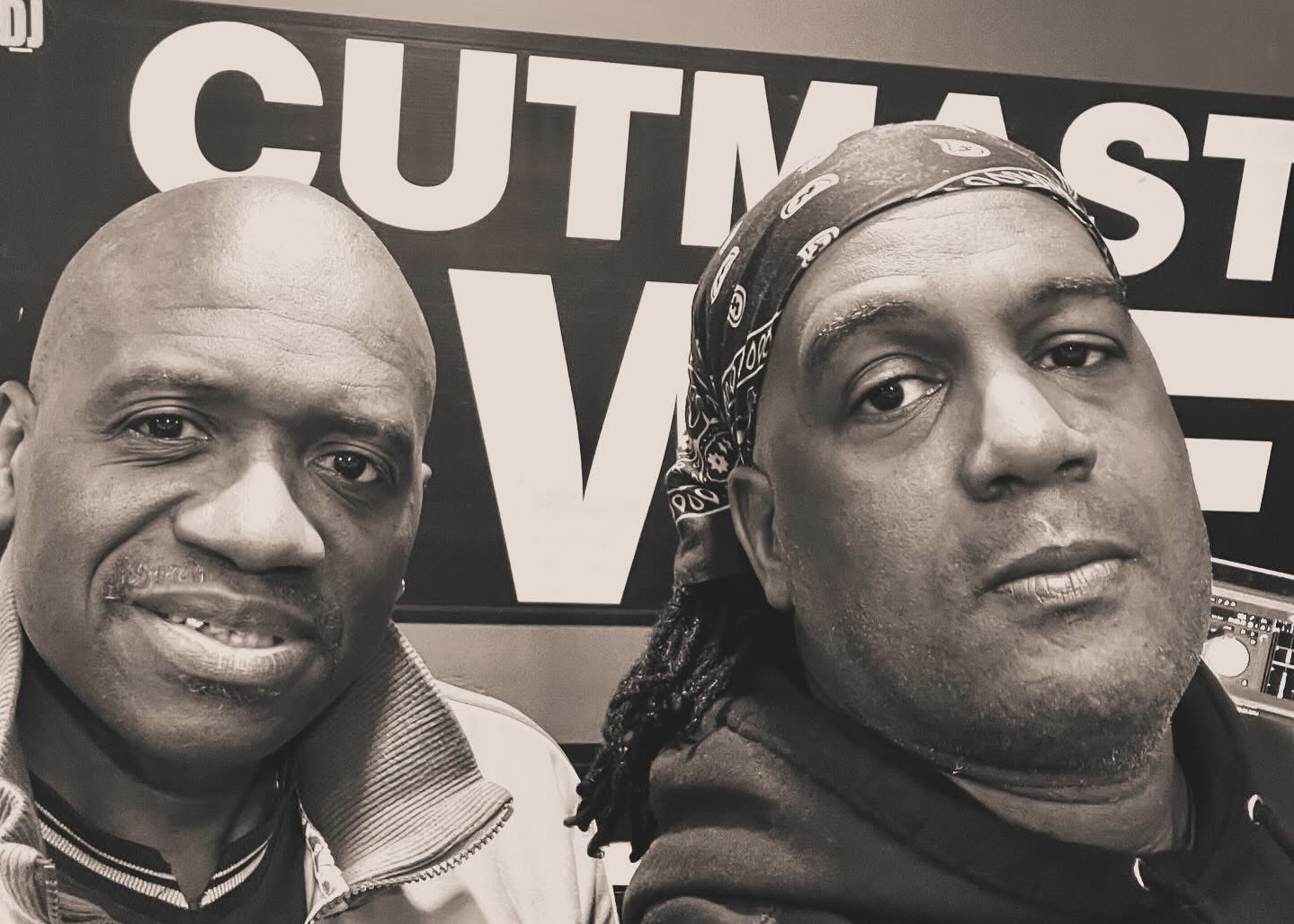
Pogo and Cutmaster Swift continue to develop the Swift & P project, building on a friendship and creative partnership that stretches back to the mid-1980s.
Music fans will also have the opportunity to hear Pogo behind the decks when he launches his own night at Roots & Grooves on 18th July, bringing together many of the records, influences and discoveries that have shaped his journey through music.
Looking back, the DMC championships, tours and records are only part of the story.
What Pogo remembers most clearly are the people – the friends, collaborators, DJs, artists and characters who appear throughout it. Forty years on, he can still reel off names, connections and memories with remarkable ease. The records remain important, but so do the people who introduced them, played them, shared them and helped build the scenes around them.