
 10.75°C

When Ady Johnson released his third album, Under Gainsborough Skies, in June, I spoke to him about the new record, the stories behind its songs and his plans to launch it at Colchester Arts Centre.
Four months on, I caught up with the Colchester-based singer-songwriter again to learn more about how he made the album, his approach to songwriting, and the work involved in producing and releasing it.
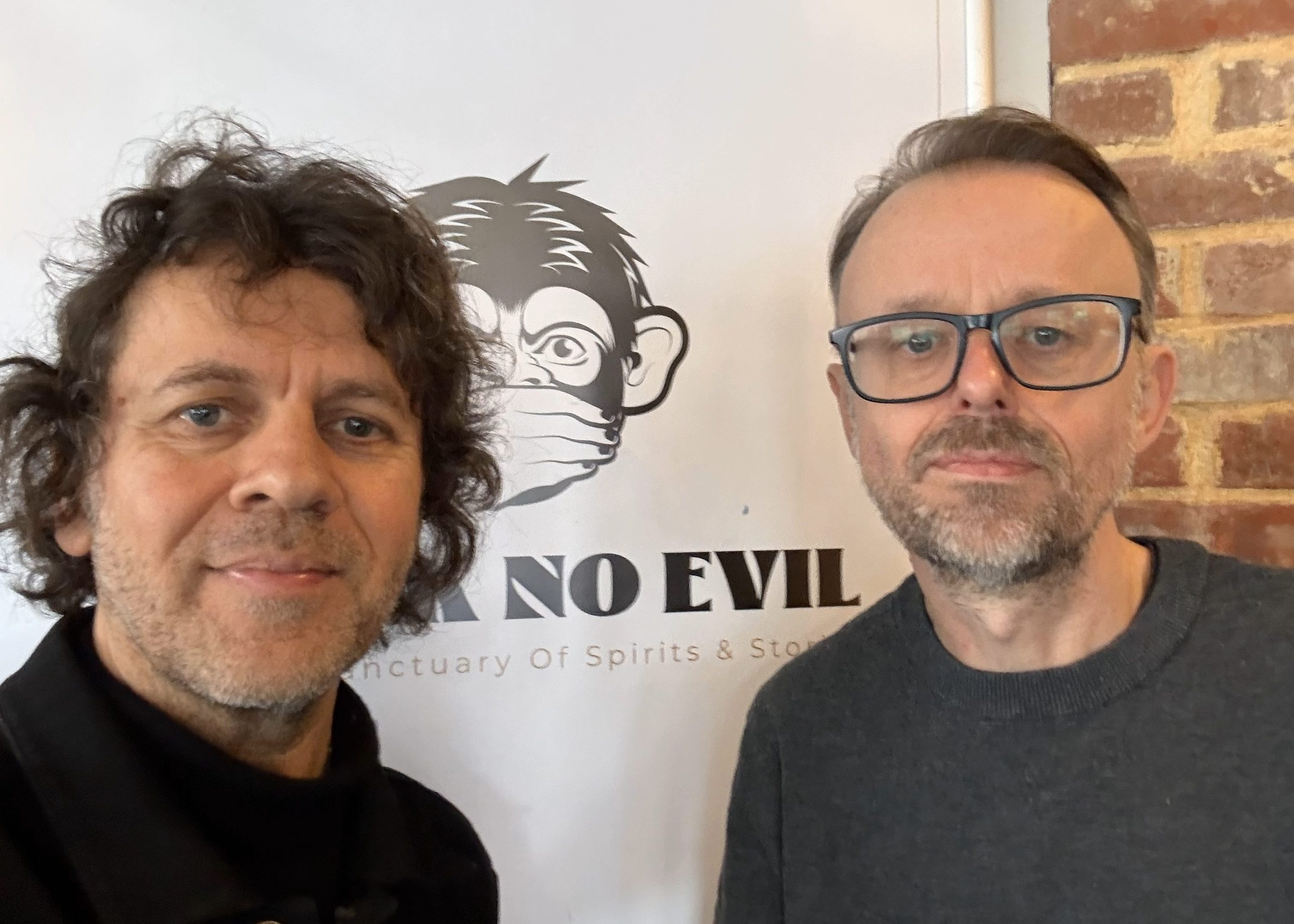
Ady had originally planned to record his voice and guitar together, capturing something close to his solo performances. He hoped this process would speed up the album compared with his previous records, but it took a number of years before it was finally released.
We began by talking about whether Ady feels he’s reached a point where he knows exactly who he is as a musician and what kind of record he wants to make.
“I would say it’s more of an evolving process rather than reaching any specific point. You’re always responding to what’s happening in your life at any particular time. I don’t think we ever reach a point as such. It’s a continually evolving thing.”
The idea for the album had first occurred to him during the crowdfunding campaign for his second album, London Songs. One of the rewards offered to supporters was a cover version of their choice, and a fan in France requested Dave Van Ronk’s Hang Me, Oh Hang Me as a Christmas present for her husband.
Ady recorded the song with Phil Deering, promoter of the Icarus Club, at his L Sound Studios in south-east London. They recorded it in a single take.
“We sort of looked at each other, and it was like, that’s it, it’s done. Essentially, we got it in one take and were in and out within 45 minutes. I thought, great, I can record a whole album like this in a weekend!”
After making Tell the Worry Dolls with a live band and working with producer Gerry Diver on the more studio-based London Songs, Ady wanted to try something different. Friends had also encouraged him to make a record that reflected his solo performances, and he decided to use a nylon-string classical guitar throughout.
“I was interested to see how that guitar would affect the writing process and affect the songs, but also give it continuity across the album.”
Ady began learning classical guitar at 15 and later gained a degree in classical guitar performance. Since then, his playing has incorporated folk, blues, rock, and pop, but his classical training remains an important influence. He points to the fast arpeggio patterns on Wash Away, Blow Away, featuring Ivor Novello Award winner Scott Matthews, as one example, though he distinguishes between the demands of classical performance and what he brings to his own songs.
“With classical guitar you’re aiming to produce a refined and beautiful sound. Whereas with this album, I felt I could get away with a bit more, and the rough edges actually add something to it. But I have found some of that finesse coming in as well on this record.”
Capturing the performance
Ady worked with Nathan Wacey at Arsenic Audio, having previously collaborated with him on Tell the Worry Dolls. Nathan had the vintage recording equipment Ady was looking for, and they shared an approach to recording. After years of performing his songs live, Ady wanted to retain the changes in pace, dynamics, and expression that can be lost when individual parts are recorded separately.
“I wanted to capture a performance, the nuances you get from a live performance, the architecture of a song. I find multitracking quite tedious, where you comp the vocals, take a phrase you like, add it in, and build it up. It’s an artifice, essentially. With this record, I wanted the ebb and flow of a performance, and I wanted the emotion to come across in that.”

Recording guitar and vocals together sometimes meant playing a song over and over until they were both satisfied. Ady remembers recording about 20 takes of one song, including false starts, before settling on the best version. Others came together much more quickly, but he appreciated Nathan’s willingness to keep working when a performance wasn’t quite right.
“It wasn’t just about the technical aspect of it. It was also about the emotional delivery of the songs and capturing that indescribable magic, that feel. Nathan has a good ear for this, and was very generous with his time. Quite often his thoughts would reflect mine. He’d say, ‘I think you could do a better one.’”
Although they intended to preserve complete performances wherever possible, they sometimes used modern editing techniques. On one occasion, they had a take they particularly liked, apart from the guitar solo. Nathan replaced it with a solo from another performance, even though neither was recorded to a click track.
“I don’t want to pretend that it’s completely like they would have done it in the old days. There was the odd occasion where we’d employ technology, and we would cheat!”
“I also added a few overdubs to bring an extra touch of colour and variety to the record. I added a few simple piano lines to the opening track ‘Foolin’ Around (with You), an idea that was inspired by Nick Drake’s song Pink Moon. I also had friends kindly contribute. Scott Matthews laid down some beautiful, ethereal bvs, which he recorded at his studio in Wolverhampton. Toby Bull suggested using a flugelhorn instead of trumpet in ‘The Runner’. It has a warmer and more rounded tone than the trumpet, and it really complements the vibe of the track. So, we used it on ‘My Honeydew’ too. Toby’s former trumpet tutor Geoff Harniess kindly lent us his flugelhorn. Toby added a few other touches, including a recorder on ‘The Old Child’s Chair’. Rev Simpkins also laid down some lovely piano on ‘Friends to the End’, which he recorded at his home.
Nathan used vintage valve microphones and a Neve mixing desk, and Ady was particularly taken with the warmth of the resulting sound. He even liked the background hiss, something that might ordinarily be regarded as an imperfection.
“In the right hands, those old valve mics and the Neve desk bring an element of warmth to the recordings. You get this noise floor, this hiss in the background, but it’s all part of the charm of it. Really, the focus was on the performances and the songs.”
The sessions continued over several months, with Ady still writing some of the material as recording progressed. Nathan’s eventual move to Cornwall delayed the album’s final stages of completion, and they had to contend with working in different locations.
“I wanted it to sound like it was recorded on the same day, which, of course, it wasn’t. Despite taking great care to match mic placements, etc., from previous sessions, it was a challenge to achieve consistent sonic production across the record. We got there in the end.”
The stories behind the songs
When writing, Ady generally begins with the music. A short guitar phrase might suggest an emotion or atmosphere, and he will start singing over it before he has any firm idea of what the lyrics will be.
“It can be a small little nugget, a phrase. You think, oh, that sounds nice, or that’s unusual, or it’s got some sort of character, or emotion attached to it. Initially, I’ll sing gobbledegook, and words will appear that I’ll latch on to – certain words will resonate. Just like when Paul McCartney sang ‘scrambled eggs’ when writing Yesterday.”
Once he has something to work with, the lyrics sometimes take a while to develop. Ady researches subjects, experiments with the sound of words and uses resources such as RhymeZone to find rhymes, synonyms and alternative expressions.
“I like finding interesting words. You can look down a list and think, oh, that’s a really colourful word. I often spend a lot of time researching a subject, reordering lyrics and finding out what fits the melody I have.”
Although the songs on Under Gainsborough Skies were written at different times, Ady began to recognise recurring themes of family, memory, mortality and the passage of time. He hadn’t planned it that way.
“There isn’t a concept as such, but there’s definitely a thread there.”
The album’s title came from a song inspired by Ady’s years living in Sudbury, Suffolk, and his memories of the surrounding countryside. His connection to the area, particularly to the artist Thomas Gainsborough, goes back to childhood.
“I’ve always had an affinity with Gainsborough. My grandad was an amateur painter. We used to visit Gainsborough’s House. He made me an easel once and a box for paints, and I used to paint as a kid.”
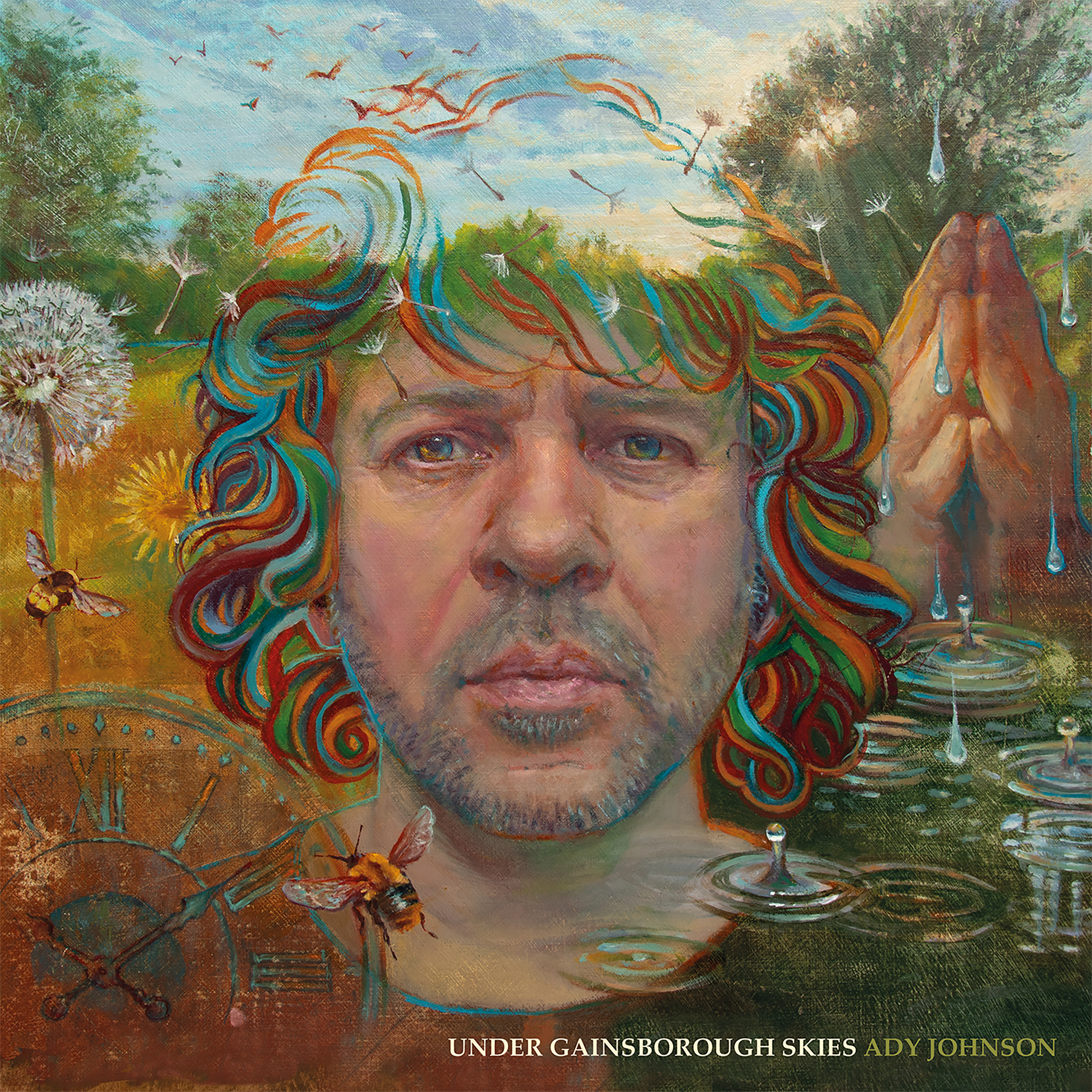
Ady later spent several years working in antiques restoration near Sudbury, and the connection with Gainsborough also found its way into the album’s artwork. His stepfather, artist David Leeming, created the cover, incorporating Ady’s image into a landscape inspired by the painter, alongside references to the songs.
Ady wrote Friends to the End in memory of his friend Jewels, who gave him a birthday card with those words. He found the card after her death and began writing the song, though he initially doubted he could do the subject justice.
“It was tough writing it. It was just a little bit too raw – but I knew she would have liked me to complete it and have another song dedicated to her!”
He worried that the song might be too sentimental, but decided to persevere.
“As a writer, you have to write about whatever is dear or poignant to you.”
Getting the album released
Once the recording finished, considerable work remained before the album could be released. Ady arranged for Eric James at Philosophers Barn Mastering to master it separately, wanting someone who hadn’t been involved in the recording sessions to listen with fresh ears. They also made decisions about artwork, sleeve design, vinyl manufacture, and distribution, all of which had to fit around his teaching and other commitments.
Graphic designer Ashley Tarr, who lives close to Ady, worked on both Under Gainsborough Skies and the vinyl reissue of Tell the Worry Dolls. For the new album, he incorporated details from David Leeming’s painting into the sleeve design, which also features a back-cover photograph by Robert Watts.
Esther Tewkesbury helped secure a distribution deal with Kartel Music Group, enabling the album to reach retailers including HMV.
“It’s hard for artists to get distribution these days. It’s tough going. They want to see units shifted, and unless you’re turning over hundreds or thousands of units, it’s not worth their administration. So, I was lucky there.”
Esther and Kartel also oversaw the manufacturing process by Optimal Media in Germany. Having handled administration on an earlier release himself, Ady was relieved to have an experienced team take care of the arrangements.”
A night at Colchester Arts Centre
Meanwhile, the concert at Colchester Arts Centre had become something quite different from what he had originally planned. Ady had wanted to celebrate the 10th anniversary of Tell the Worry Dolls, but the pandemic interrupted those plans. A later attempt to mark its 15th anniversary was postponed because of illness, and by the time they set a new date, Under Gainsborough Skies was ready for release.
Rather than hold separate concerts, he decided to combine the two occasions and perform both albums in full.
“In an ideal world, I would have had that 15th anniversary and the new album a good year apart. But fate had a different plan.
The concert took place on 30 June, although Ady’s preparations weren’t helped by having to take part in a school concert that afternoon. He then had to get home, change and prepare for the evening’s performance. Playing two complete albums was demanding enough, but he was particularly conscious of the intricate guitar parts on the new record.
During his classical guitar studies, Ady had struggled with performance anxiety, sometimes finding that his fingers would tighten and make playing difficult. Years of live performances helped him become more confident, though he admits he hadn’t rehearsed as much as he would have liked for the Arts Centre concert.
“Much to my surprise, it just happened. It just fell into place. There was no freezing. There were maybe some hairy moments, but the confidence of having performed for so many years and just committing to it and throwing myself into the music, somehow, I managed to pull it off!”
Ady describes organising and performing at his own album launch as rather like hosting a party. There was so much to attend to that he found it difficult to take in everything happening around him. Friends and supporters had travelled from places including Nottingham and Reading, while others in the audience had followed his music since the early days.
Afterwards, he began to hear what the evening had meant to people.
“My mum said it was one of the happiest days of her life. I found that really touching. It wasn’t just because of the music. Friends and family were there, and there was a real sense of community. It was just a lovely event.”
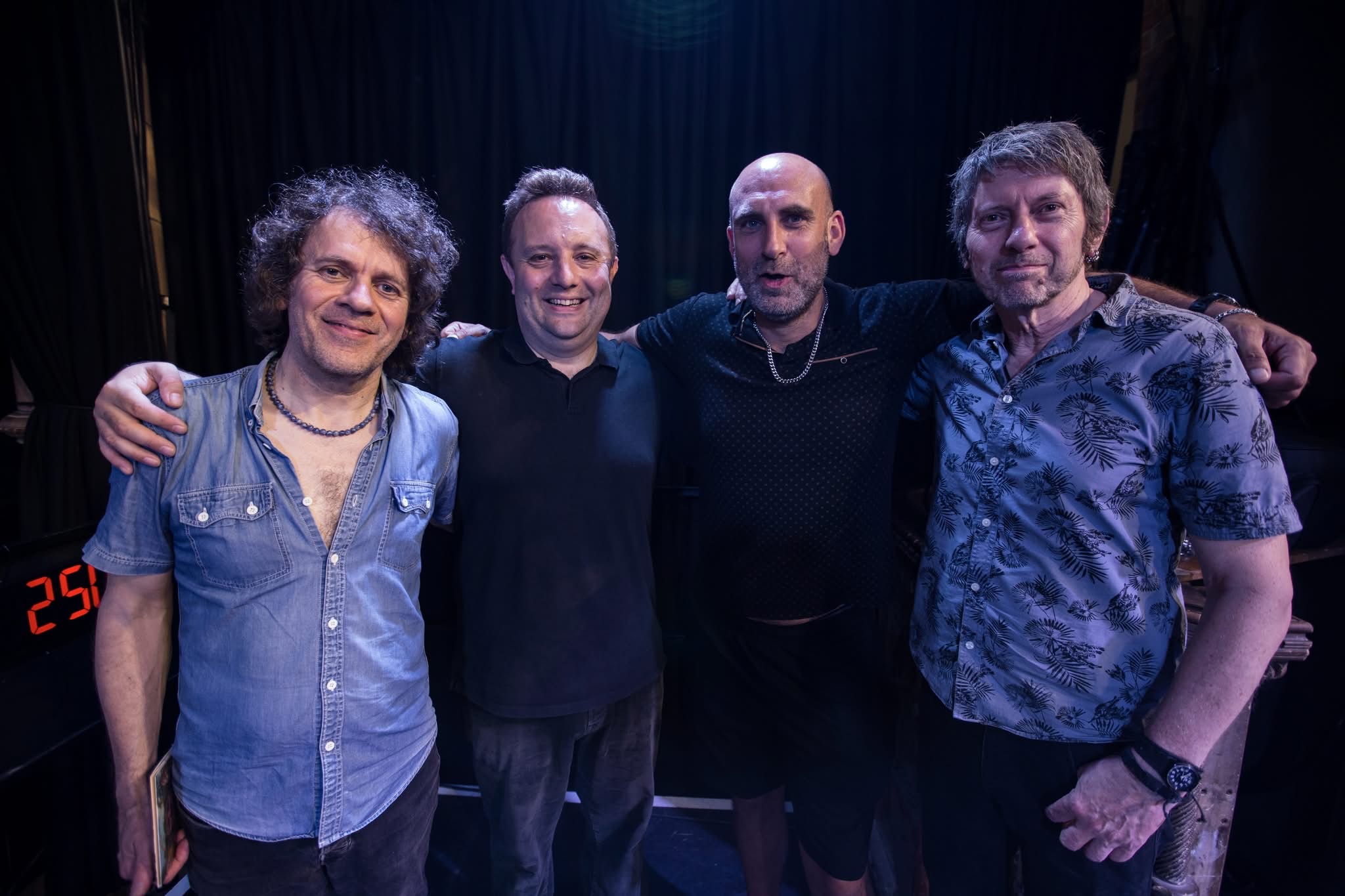
With the album released and the launch concert behind him, Ady has been considering how the new material sits alongside his older songs when he performs live. The two albums he played at Colchester Arts Centre are musically quite different, and bringing them together presents its own challenges.
They are different, but they also share similarities. It’s great to have a pool of new material to draw upon. It’s been a case of finding out where the newbies fit in and putting together sets that have a good shape and flow.”
Advice for aspiring songwriters
Towards the end of our conversation, I asked Ady what advice he would give singer-songwriters starting out.
“One of the things I think has helped my creativity is being open to and listening to lots of different types of music – even stuff I don’t particularly like. Also, having an interest in other art forms. There’s always something to learn.”
He also recommends learning other people’s songs.
“By learning and covering other artists’ songs, over time, you can start finding your own voice as a writer and performer.”
And while his musical background includes years of formal classical training, he doesn’t believe technical ability is everything.
“By all means hone your craft, but you don’t have to be the most technically brilliant guitarist or singer to write a great song – you can say a lot with just three chords and a good melody and lyric. Write to please yourself first, and if it resonates with you, there’s a good chance it’ll resonate with others too.”
Catch Ady Johnson live in Colchester
Catch Ady performing live at two Colchester venues before the end of the year. Both gigs are free to attend.
Sunday 8 November 2026
Live In-Store at Stone Rock Records
Sunday 13 December 2026
Annual Colchester Christmas Gig at the Victoria Inn
